
Start with energy needed each day
Use your car's real consumption and normal daily distance. As an illustration, 50 km at 18 kWh per 100 km uses about 9 kWh for driving. Charging losses mean the supply must provide a little more.
That daily top-up is different from refilling an empty battery. Your usual parking window often matters more than maximum charger speed.
Check the slowest part of the system
Home AC charging is limited by the vehicle's onboard charger, the wall charger and the electrical supply. A 22 kW wall unit will not deliver 22 kW to a car that accepts only 11 kW AC.
A licensed electrician should assess supply capacity, phase, switchboard protection and cable routing. Do not use improvised wiring or extension leads as a charging solution.
Solar-aware charging
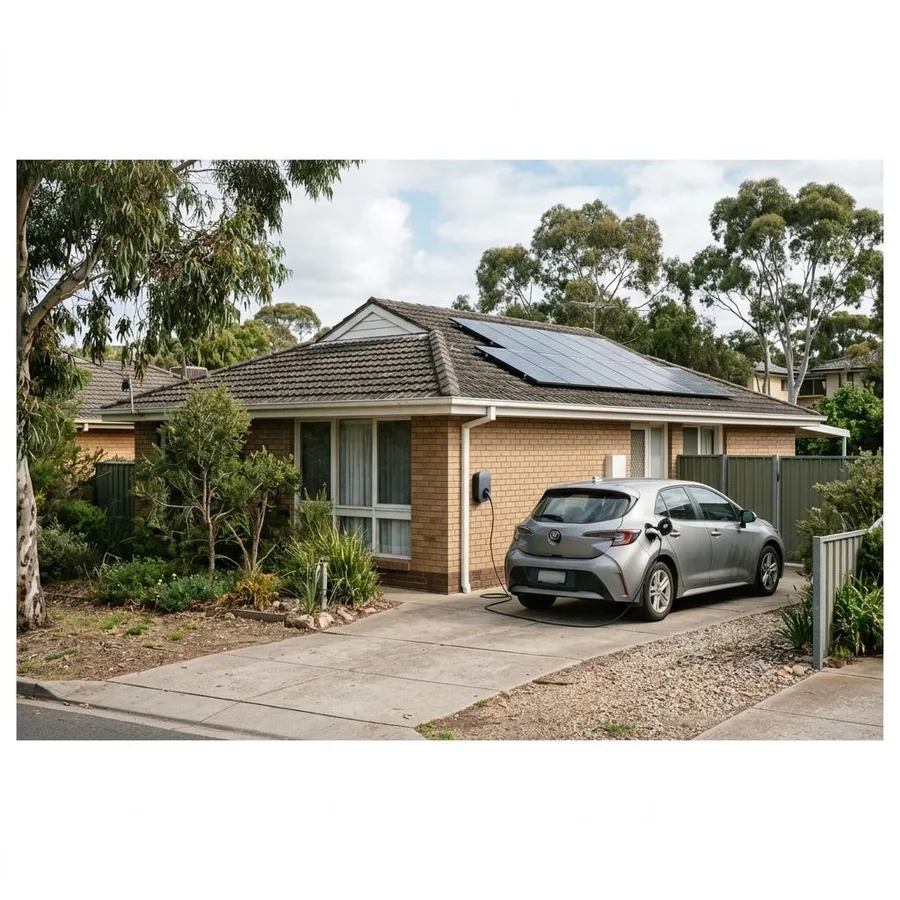
A compatible solar-aware charger can vary output with measured surplus generation. Ask what monitoring hardware it needs and its minimum operating power. Cloudy weather or competing household loads may reduce or interrupt solar-only charging.
If you commute during daylight, compare weekend solar charging with an appropriate off-peak plan. A solar array cannot charge a car that is away from home.
Coordinate the battery and charger
Without suitable controls, an EV can draw from your home battery rather than directly from solar. That may leave less energy for the evening or backup.
Ask how the controls prioritise the car, home battery and household loads. Dynamic load management can reduce charger output when other appliances need power. Verify that the specific products work together.
Sources
Sources are linked for background reading. They do not endorse Green Home. This is general information, not advice for your home; a site assessment is needed for a recommendation.